The blank page is expensive. Not because writing is slow, but because typing is: your inner editor gets a vote on every sentence before it exists. Dictation breaks that tie. You cannot delete what you have not said yet, so the draft arrives whole, and the editing happens after, where it belongs.
The arithmetic of a first draft
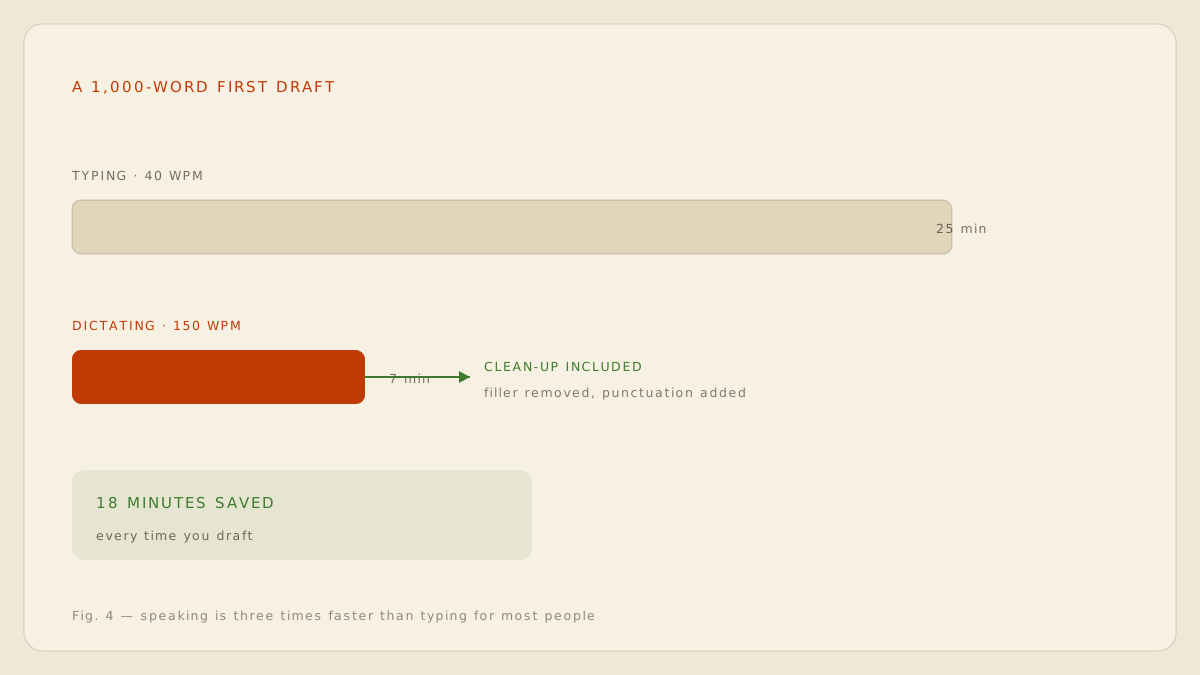
Average conversational speech runs around 150 words per minute. Average sustained typing is closer to 40. A 1,000-word first draft is 25 minutes at the keyboard and about 7 out loud, and the spoken draft usually has better sentence rhythm because it was built for a listener. [1]
The two-mode workflow
THE WORKFLOW, STEP BY STEP
STEP 1
Outline in three bullets
Before you speak, write three bullet points. They are scaffolding, not prose: they keep the take on rails.
STEP 2
Dictate the whole draft
Hold the hotkey and talk through the bullets without stopping to fix anything. Wrong words stay in; the editor comes later.
STEP 3
Let clean-up run
The clean-up pass removes filler, adds punctuation and straightens grammar before the text lands. You start from tidy, not perfect.
STEP 4
Edit at the keyboard
Now switch modes. Cut, tighten, restructure. Editing a real draft is always faster than conjuring one.
Where people give up
DICTATION FOR DRAFTING, HONESTLY
FOR
- First drafts arrive in a third of the time
- Spoken drafts read more naturally
- Zero blank-page paralysis: talking is easy
- Works in any app you already write in
AGAINST
- Feels strange for the first week
- Needs a quietish room for best accuracy
- Editing by voice is miserable: do it by keyboard
Making the habit stick
The writers who stick with dictation all do the same thing: they make the trigger identical every time. Same hotkey, same position in the chair, same app open. Habit research is blunt on this point: consistency of cue beats intensity of intention. [2] After two weeks the hotkey feels like opening a notebook.
The first draft is just you telling yourself the story. Nobody types a story faster than they can tell it.